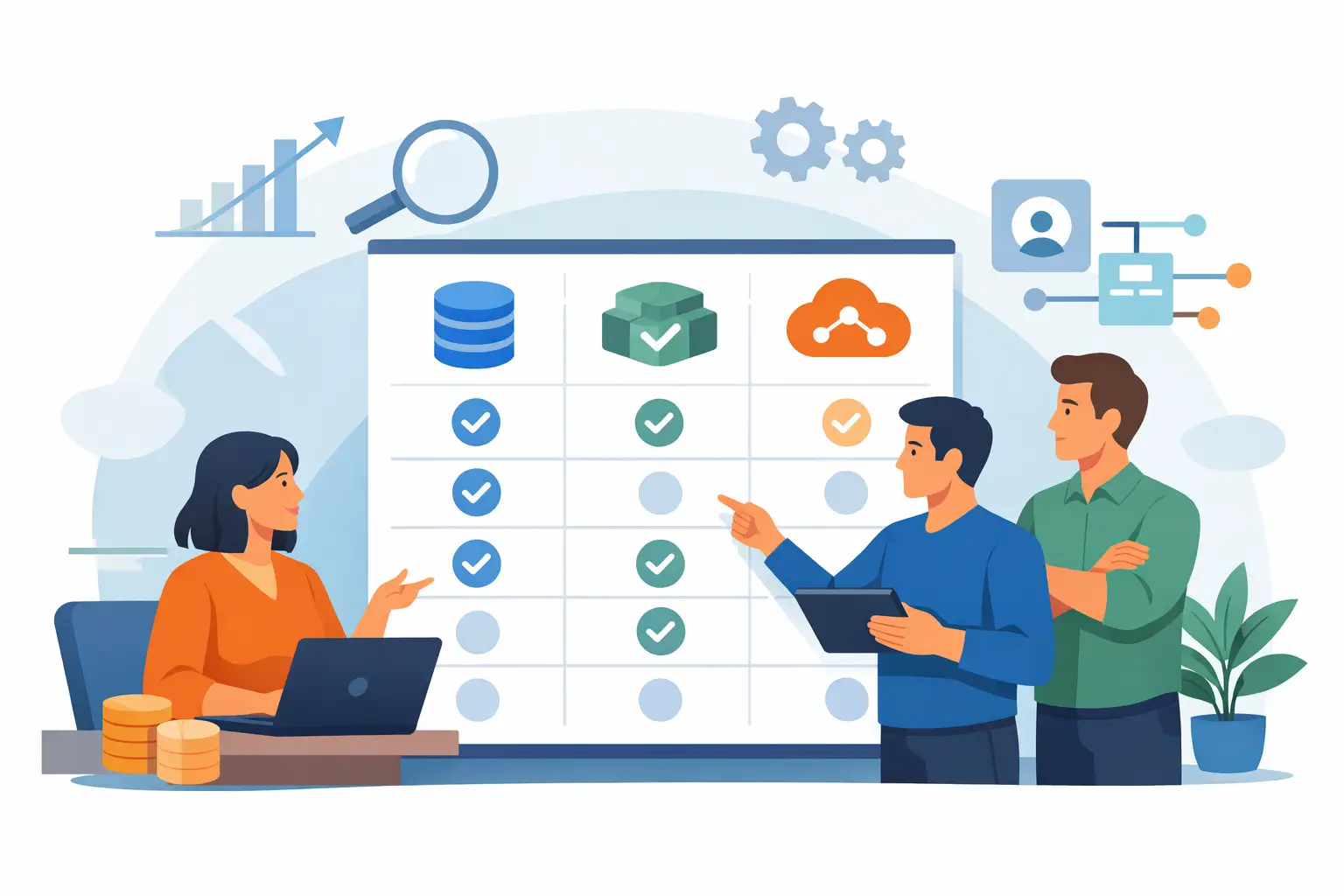
A flat rate CRM comparison should begin with one question: will the price still make sense when your pipeline gets busy? For a growing team, CRM costs are not just a monthly line item. They affect whether everyone keeps customer information in one place, whether sales can work from the same view, and whether the software remains useful after the first few months.
A fixed price is appealing for good reason. It removes the awkward hunt through pricing pages, the surprise upgrade prompt and the sales call needed to access a basic feature. But flat rate does not always mean the same thing. The detail matters.
What flat rate actually means in a CRM
In CRM software, flat rate can describe two very different models. The first is a fixed per-user price. Every user gets the same plan, with the same core features, and your bill rises only as your team grows. The second is a fixed price for the whole business, regardless of seat count, usually with a fair-use limit hidden somewhere in the terms.
Neither model is automatically better. A small consultancy with five people may prefer a simple team-wide fee. A sales team adding new starters throughout the year may find per-user pricing more predictable. The key is that the price should be easy to explain without a spreadsheet.
Be careful with platforms that call their entry plan flat rate but reserve key functions for higher tiers. If contact management sits on one plan, deal pipelines on another, and reporting on a third, the starting figure is not the price of a usable CRM. It is the price of a trial run.
A genuinely straightforward plan makes it clear what every user receives. Contacts, companies, deals, tasks, activity history and the day-to-day tools needed to keep relationships moving should not feel like premium extras.
Flat rate CRM comparison: look beyond the headline
The cheapest monthly figure is rarely the whole story. A useful flat rate CRM comparison looks at the total cost of running the system properly, not simply the number printed beside the word monthly.
Start with the number of users you expect to have in six and 12 months. Then ask whether each person who needs visibility counts as a paid seat. Some systems charge for account managers and salespeople but also require paid access for managers who need reports, or administrators who maintain the data. That can be perfectly fair. It just needs to be visible from the start.
Next, check the billing rhythm. A low advertised rate may depend on annual payment, while month-to-month billing costs more. Annual plans can work well for established teams, but newer businesses may value the freedom to adjust as roles and headcount change.
Then look for costs outside the main subscription. Common pressure points include extra storage, premium support, reporting, automation, data exports and integrations. These are not always unreasonable charges. A specialist integration may genuinely cost more to provide. The problem begins when ordinary CRM work is split into paid add-ons simply to make an entry plan look cheaper.
Finally, consider the cost of complexity. This is harder to put on an invoice, but it is real. If your CRM needs weeks of configuration, a consultant to maintain it or regular training to stop people making mistakes, the platform is expensive even when the licence fee is low.
Compare the work your team needs to do
Your CRM should support the rhythm of your business. For an agency, that may mean keeping client contacts, live opportunities and follow-ups close together. For a B2B sales team, it may mean seeing the next action on every deal and knowing who last spoke to the account. For a founder, it may simply mean replacing scattered notes and ageing spreadsheets with a shared, reliable record.
That changes what good value looks like. A business running a high-volume outbound sales operation may need advanced sequencing and detailed performance controls. A small professional services firm may get more value from a clear account view and a pipeline that everyone actually updates.
Do not pay for the most extensive feature list if half the tools will stay untouched. More options can create more inconsistency. One person logs calls in one area, another adds notes elsewhere, and a third avoids the system completely because it feels like too much work.
The better test is simple: can a new team member understand where to find a contact, update a deal and record the next step without a long explanation? If not, the CRM may be built for a different kind of organisation.
Where fixed CRM pricing can fall short
Transparent pricing does not mean a platform is right for every team. A flat plan can be limiting when your business has unusually technical requirements, large-scale data needs or complex approval processes. Enterprise organisations may need fine-grained permissions, bespoke reporting structures or connections with systems across finance, service and operations.
There is also a difference between simple and stripped back. A CRM still needs enough structure to be dependable. Contacts should connect to the right companies. Deals should have a clear stage and value. Activities should tell the next person exactly what has happened. If a tool removes these foundations in the name of simplicity, it may leave your team rebuilding the process in notes and spreadsheets.
Look at limits with a practical eye. Limits on contacts, pipelines, fields, reporting or exports can become a problem as the business grows. The right answer depends on how you work. A cap on advanced automation may not matter to a relationship-led consultancy. A cap on records could matter a great deal to a business building a large prospect database.
Questions worth asking before you choose
Before committing, get precise answers to five questions:
- Is the advertised rate per user or for the whole team, and are there minimum seat numbers?
- Which everyday CRM features are included for every user?
- What triggers an upgrade or an extra charge?
- Can you export your contacts, companies, deals and activity history if your needs change?
- How quickly can a normal team be up and running without outside help?
These questions cut through the polished pricing grid. They also reveal whether the provider trusts customers to make an informed decision. Clear answers are a good sign. Vague phrases such as tailored package or talk to sales are not always a reason to walk away, but they signal that budgeting may take more work.
The case for one clear plan
For many small and mid-sized businesses, one well-designed plan is more useful than a staircase of packages. It lets teams choose CRM software based on fit, not on whether a vital feature happens to sit behind the next paywall.
This is the thinking behind Monty CRM’s planned £9.49 per-head pricing: one clear plan for teams that need to manage contacts, track deals and grow revenue without carrying enterprise weight. It is not about offering everything imaginable. It is about including what earns its place in daily work.
That distinction matters. A CRM should make good relationship management easier, not give your team another system to negotiate. When pricing and product design are both clear, people are more likely to use the platform consistently. Better data follows. Better handovers follow too.
Choose the price model you can live with
A flat rate CRM is a strong choice when it gives you predictable costs, the essentials for every user and enough room to grow without forcing a rethink at each milestone. It is less compelling when flat pricing only describes the first layer of a heavily tiered product.
Give the pricing page the same scrutiny you would give a proposal from a new supplier. Check what is included, what is limited and what happens when your team succeeds. The right CRM should leave more time for customers, conversations and the work that moves a deal forward.